Sam Moore

Robotics + Dynamics + Learning + Optimization

PhD Candidate
Duke University
sam.a.moore {at} duke {dot} edu

I am an NSF Graduate Research Fellow in the General Robotics Lab @ Duke University, advised by Dr. Boyuan Chen.

Prior to joining the General Robotics Lab, I was a member of the Duke Dynamical Systems Lab advised by Dr. Brian Mann.

As a PhD student, I have worked across AI, robotics, nonlinear dynamics/mechanics, and control.

I completed my bachelors studies at the University of Kentucky in kinesiology and statistics.

Google Scholar  /  Linkedin  /  Github

About

I'm interested in anything robotics, dynamical systems, learning, and optimization. Recently, I've been focused on developing smooth neural surrogates for model-based reinforcement learning. I also like physiology and biomechanics, which I studied as an undergrad.

I like working on challenging problems that sit at the intersection of multiple fields, and I enjoy using accelerated computing, differentiable programming, and modern machine learning to tackle these problems.

In my free time, I enjoy watching Cincinnati sports (regrettably), calisthenics/weight lifting, all things outdoors, and just hanging out with my cat, Molly. I might also be one of the only valid Kentucky and Duke fans out there.

Research

Learning Legged MPC with Smooth Neural Surrogates
Sam A. Moore, Easop Lee, Boyuan Chen
2025
download preprint

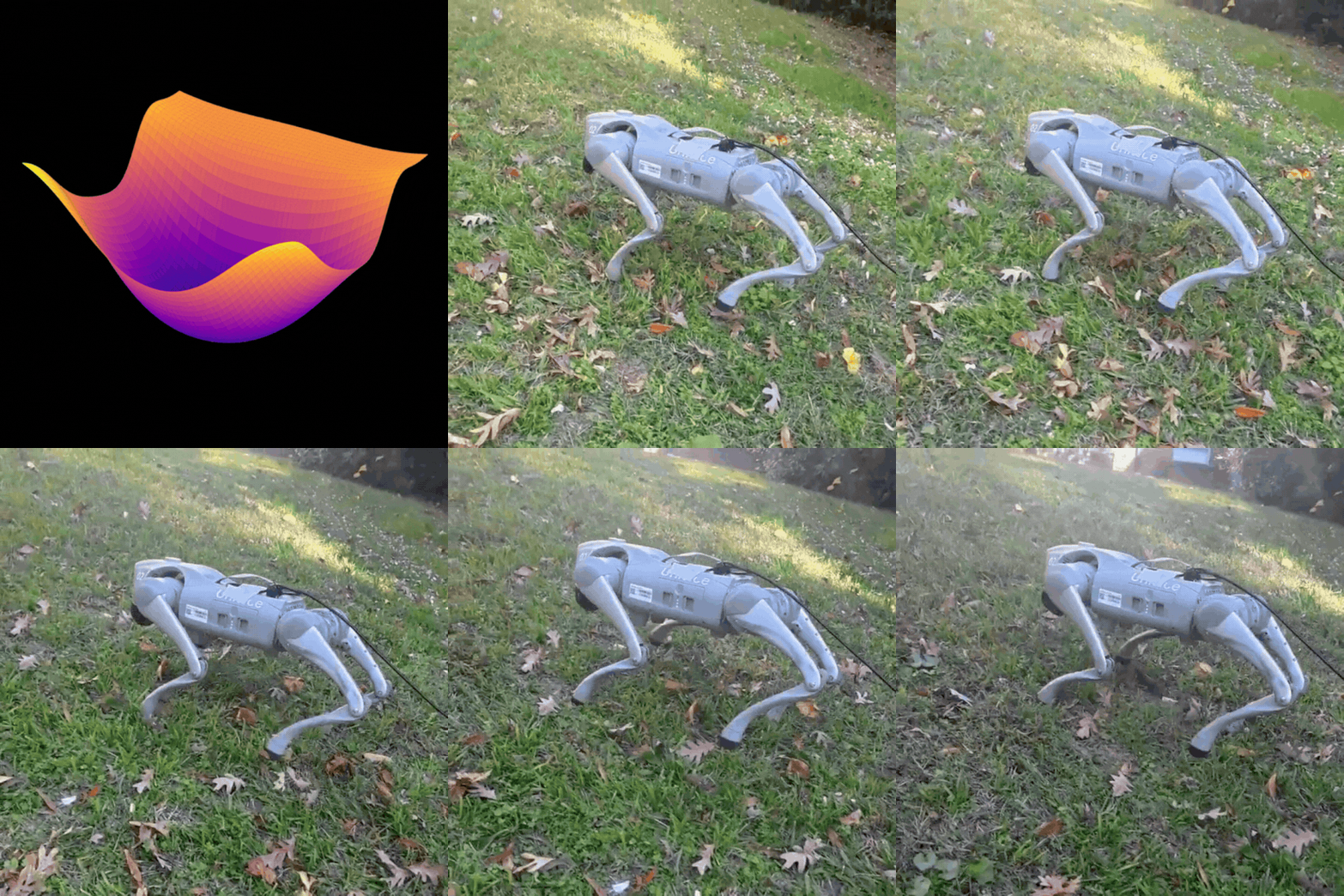
We introduce an architecture and likelihood function specifically designed for learning smooth neural models for nonsmooth dynamics. These models are expressive, flexible, and provide more informative derivatives for gradient-based model predictive control through contact in legged robots.

Sym2Real: Symbolic Dynamics with Residual Learning for Data-Efficient Adaptive Control
Easop Lee, Sam A. Moore, Boyuan Chen
2025
project page; paper; code; youtube

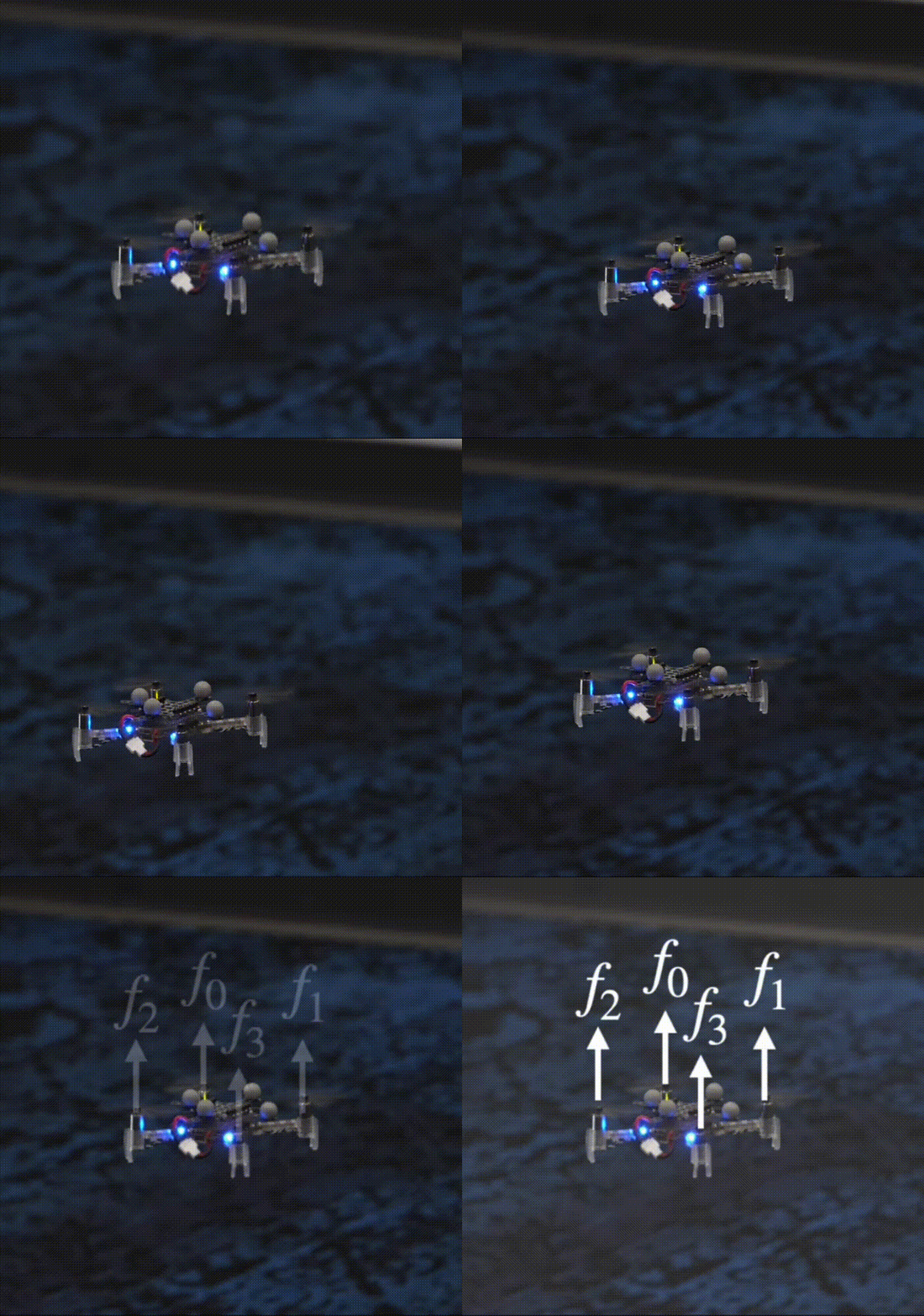
Using only about 10 trajectories, we achieve robust control of both a quadrotor and a racecar in the real world, without expert knowledge or simulation tuning.

LAPP: Large Language Model Feedback for Preference-Driven Reinforcement Learning
Pingcheng Jian, Xiao Wei, Yanbaihui Liu, Sam A. Moore, Michael P. Zavlanos, Boyuan Chen
Transactions on Machine Learning Research (TMLR), 2025
project page; paper; code; youtube

Here, we use LLMs to replace human feedback in preference-based reinforcement learning. Our method, Large Language Model Assisted Preference Prediction (LAPP), leverages LLMs to generate feedback on agent behaviors, enabling efficient policy learning, and behavior shaping without explicit reward engineering.

Semantic Visual Self-Modeling for Whole-Body Awareness in Legged Robots
Sam A. Moore, Easop Lee, Boyuan Chen
2024
code

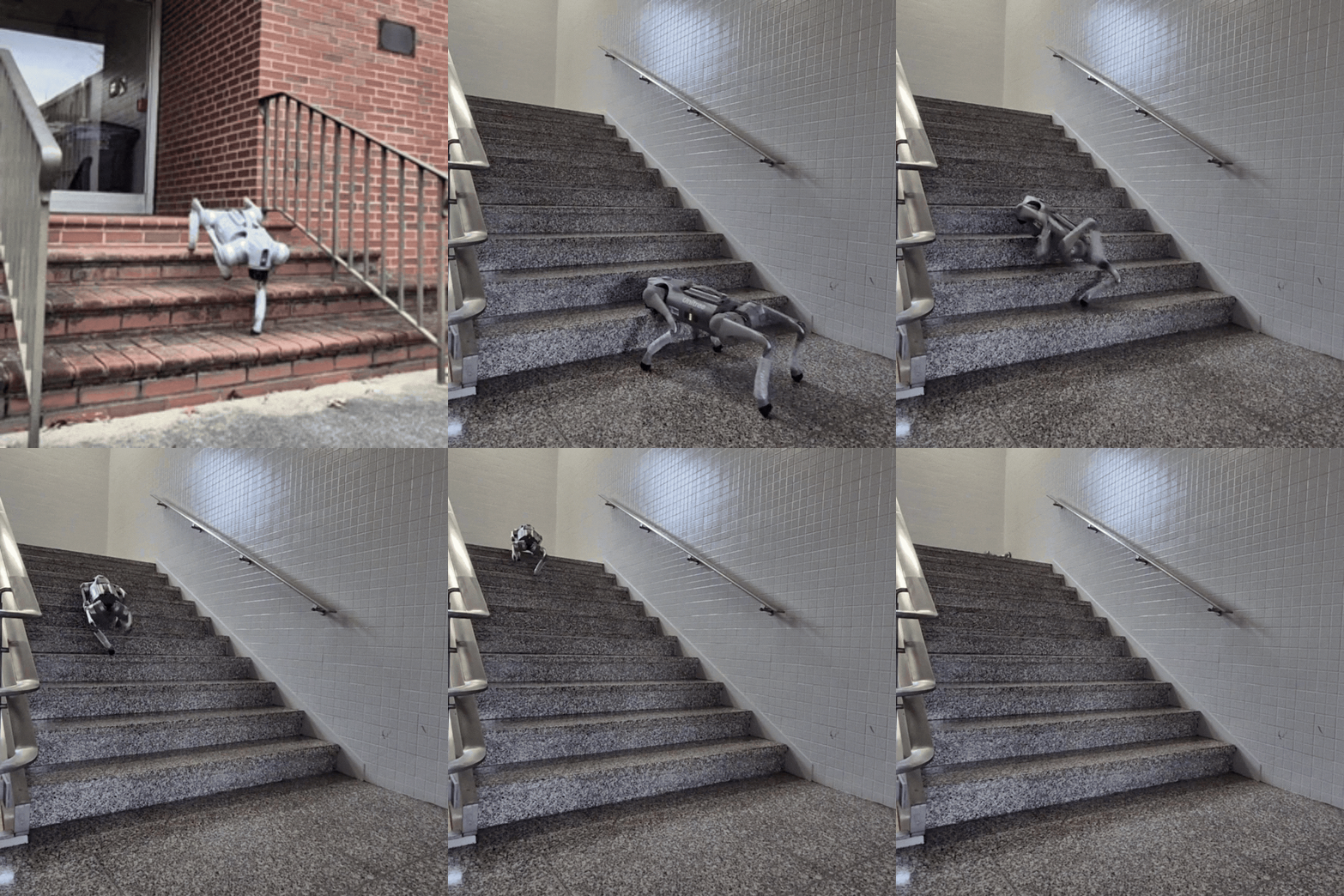
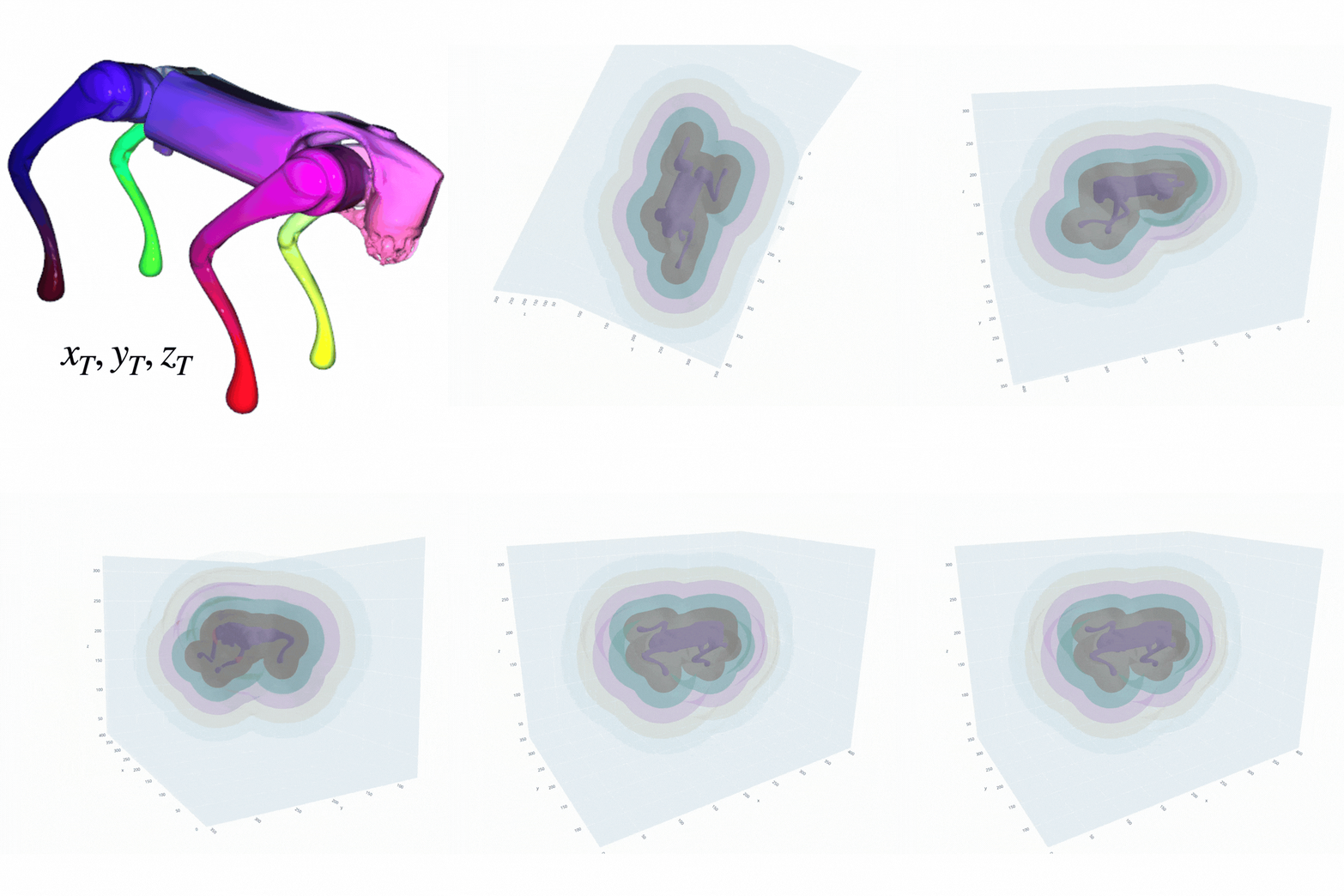
In this project, we developed learned 3D models of a legged robot's body to instill whole-body awareness for downstream planning or world models. I hope to soon combine this work with my ongoing research on smooth neural surrogates, and contact-rich control.

Automated Global Analysis of Experimental Dynamics through Low-Dimensional Linear Embeddings
Sam A. Moore, Brian P. Mann, Boyuan Chen
npj Complexity, 2025
project page; paper; code; youtube

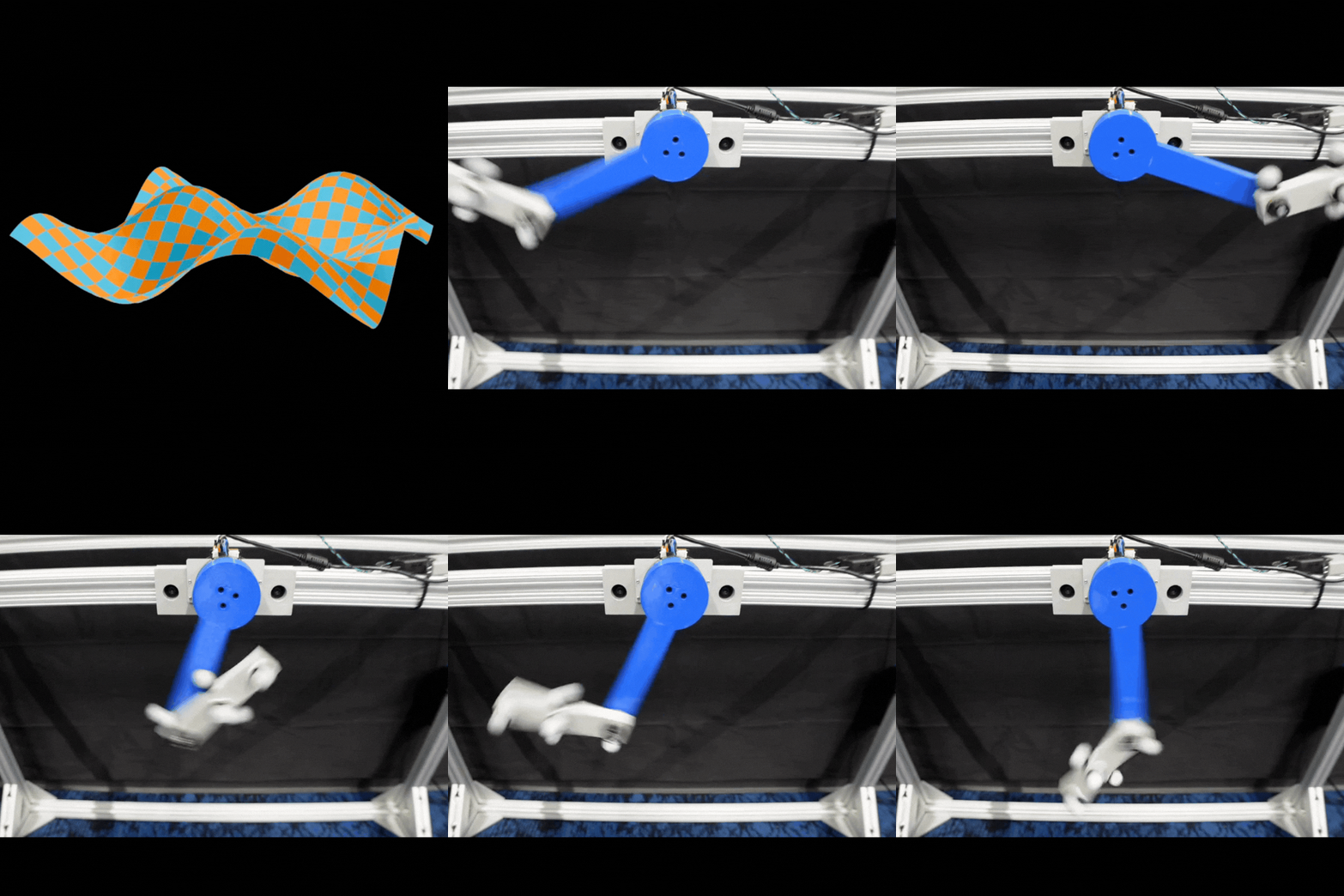
This work presents an end-to-end approach for discovering hidden stuctures in experimental data from dynamical systems. We simulaneously address challenges in applied dynamical systems due to mathematical modelling, nonlinearity, and high dimensionality through low-dimensional linear embeddings of nonlinear dynamics.

Differentiable Direct Collocation for Hardware-Software Co-Design
Sam A. Moore, Brian P. Mann, Boyuan Chen
2023
code

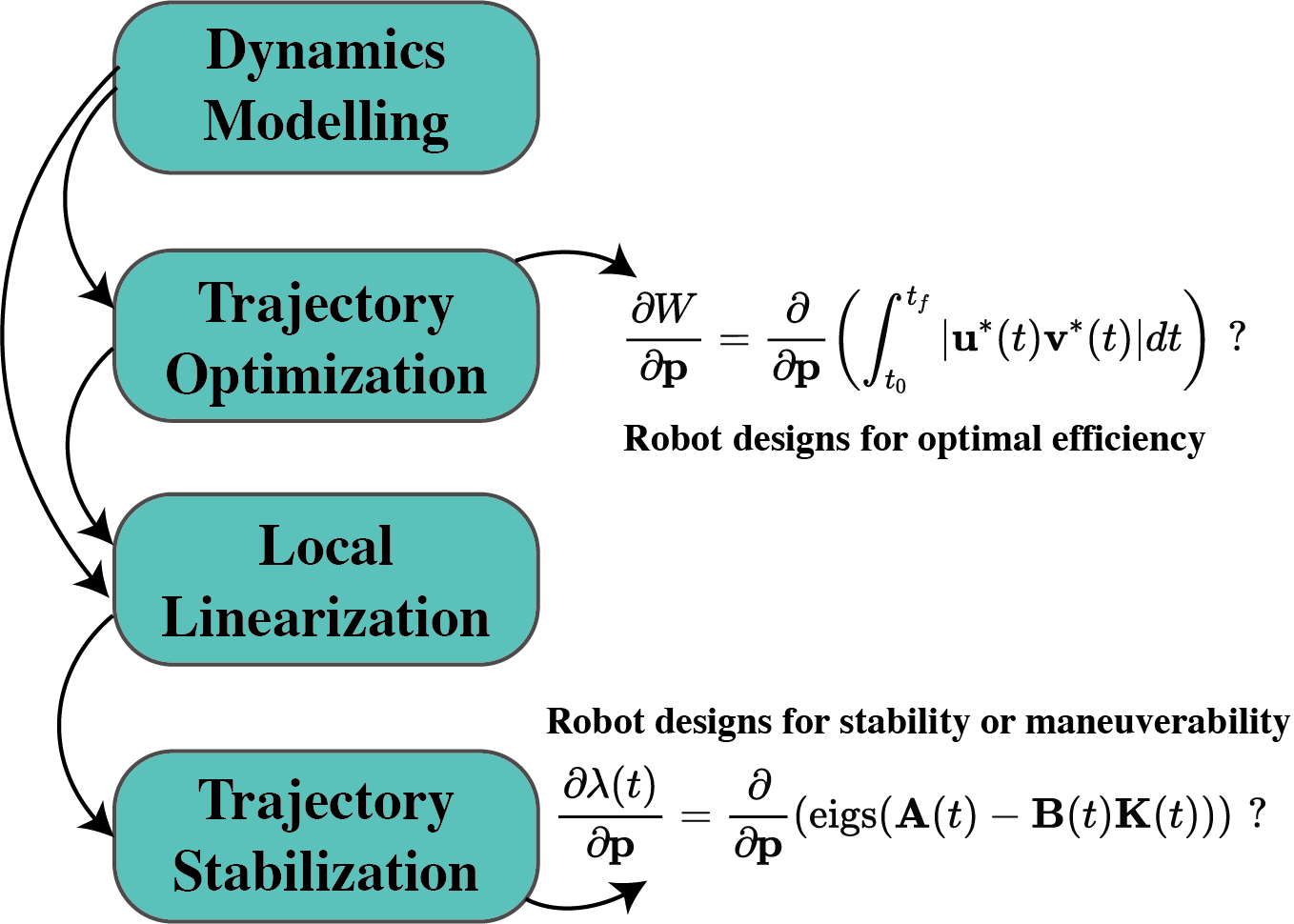
This project has not been under active development for quite a while, but my original motivation was to explore how a system’s physical parameters influence its controllability, stability, maneuverability, etc.. I planned to do this by differentiating through a closed-loop controller around a nominal trajectory obtained via trajectory optimization. I developed a differentiable direct collocation library in JAX via IPOPT and implicit differentiation, then obtained some preliminary results on a simple cart-pole. I also derived differentiable time-varying LQR via the adjoint state method for trajectory stabilization.

Comparison of Data-Driven Methods on Discovering the Dynamics of the Unforced Multi-axis Cart System
Hunter R. Kramer, Sam A. Moore, Boyuan Chen
International Modal Analysis Conference, 2024
paper

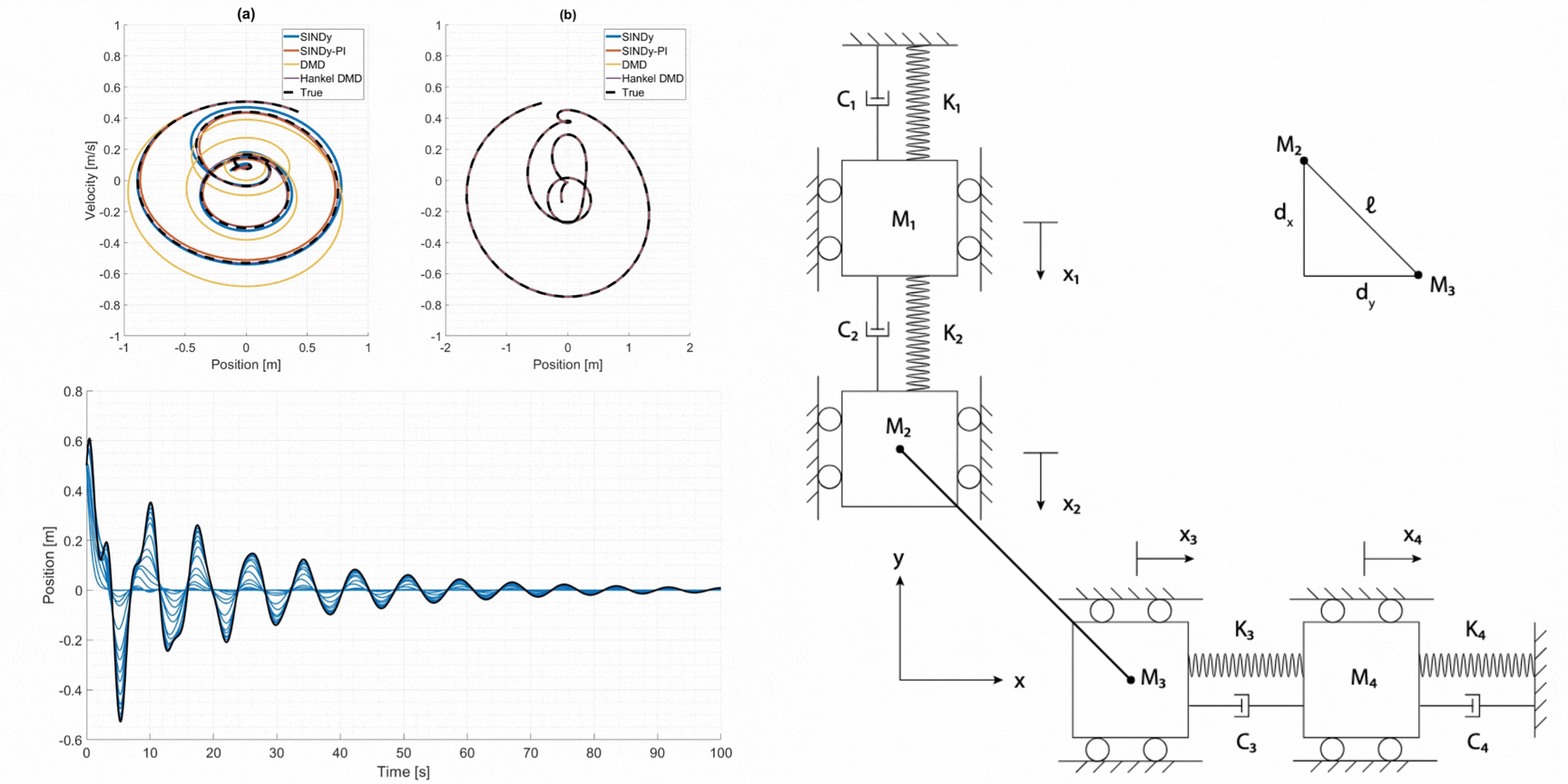
This work compares various data-driven methods for uncovering the dynamics of the unforced multi-axis cart system, which is particularly interesting as it can be configured as either a linear or nonlinear system.

Stability Prediction via Parameter Estimation from Milling Time Series
James D. Turner, Sam A. Moore, Brian P. Mann
Journal of Sound and Vibration, 2023
paper

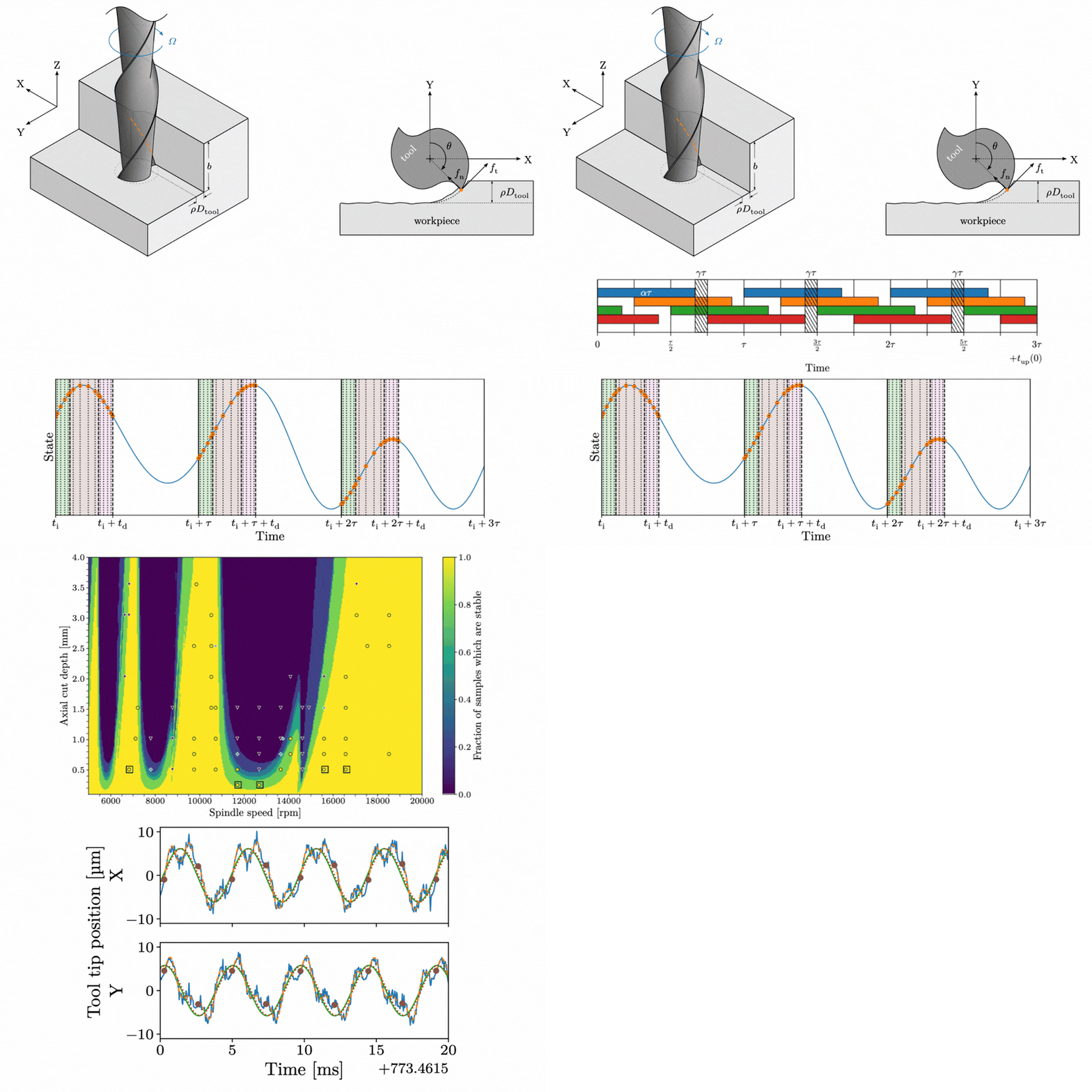
This paper introduces an approach to automated milling stability analysis whereby the vibration behavior of a milling tool during cutting is used to directly obtain a bifurcation diagram of the system at real-time rates.

A Model-Free Sampling Method for Basins of Attraction Using Hybrid Active Learning
Xue-She Wang, Sam A. Moore, James D. Turner, Brian P. Mann
Communications in Nonlinear Science and Numerical Simulation. 2022
paper; project page

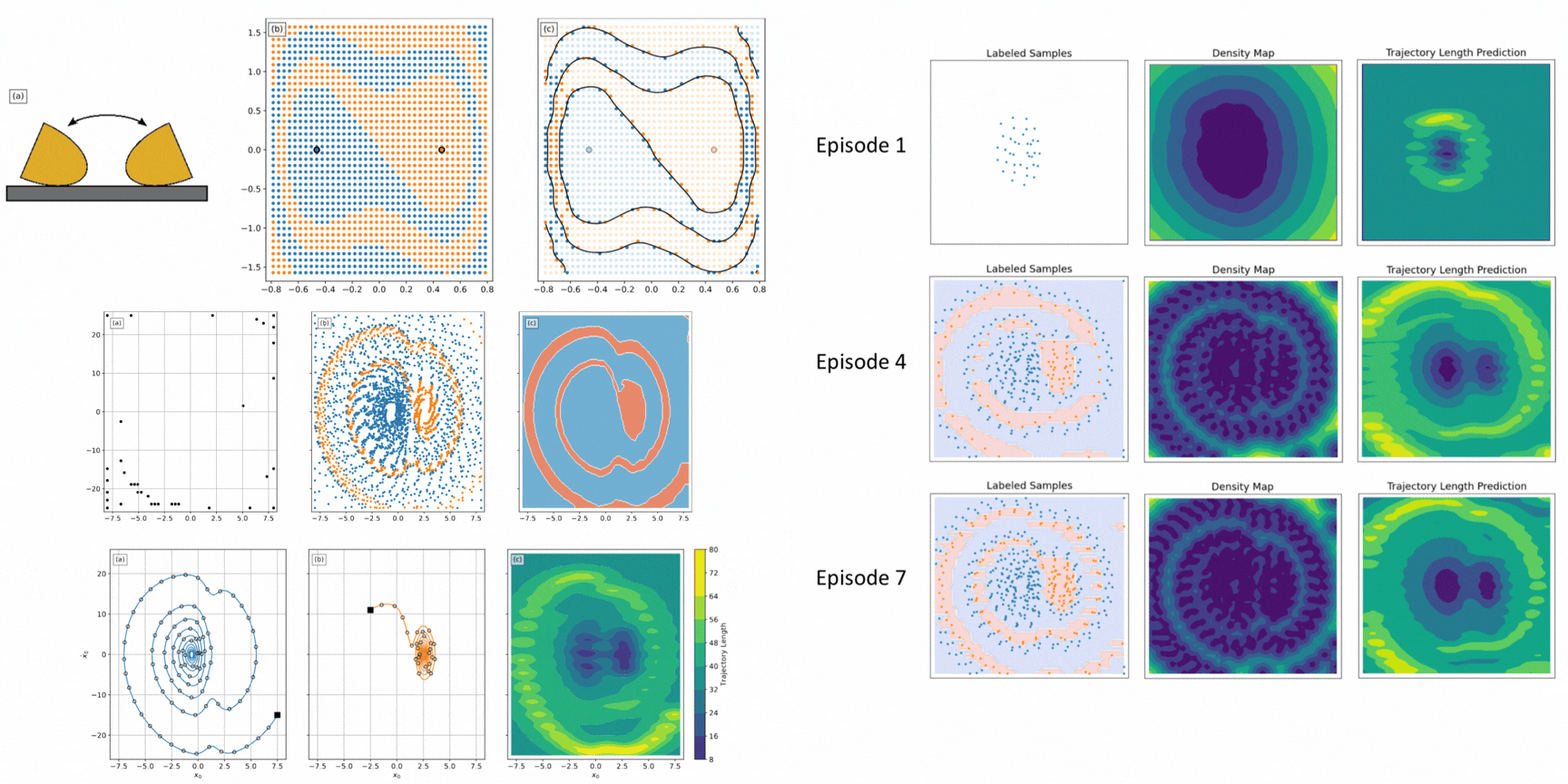
This work explores hybrid active learning as an efficient method to automatically discover the basins of attraction of dynamical systems.

Supervised Learning for Abrupt Change Detection in a Driven Eccentric Wheel
Sam A. Moore, Dean Culver, Brian P. Mann
International Modal Analysis Conference, 2022
paper

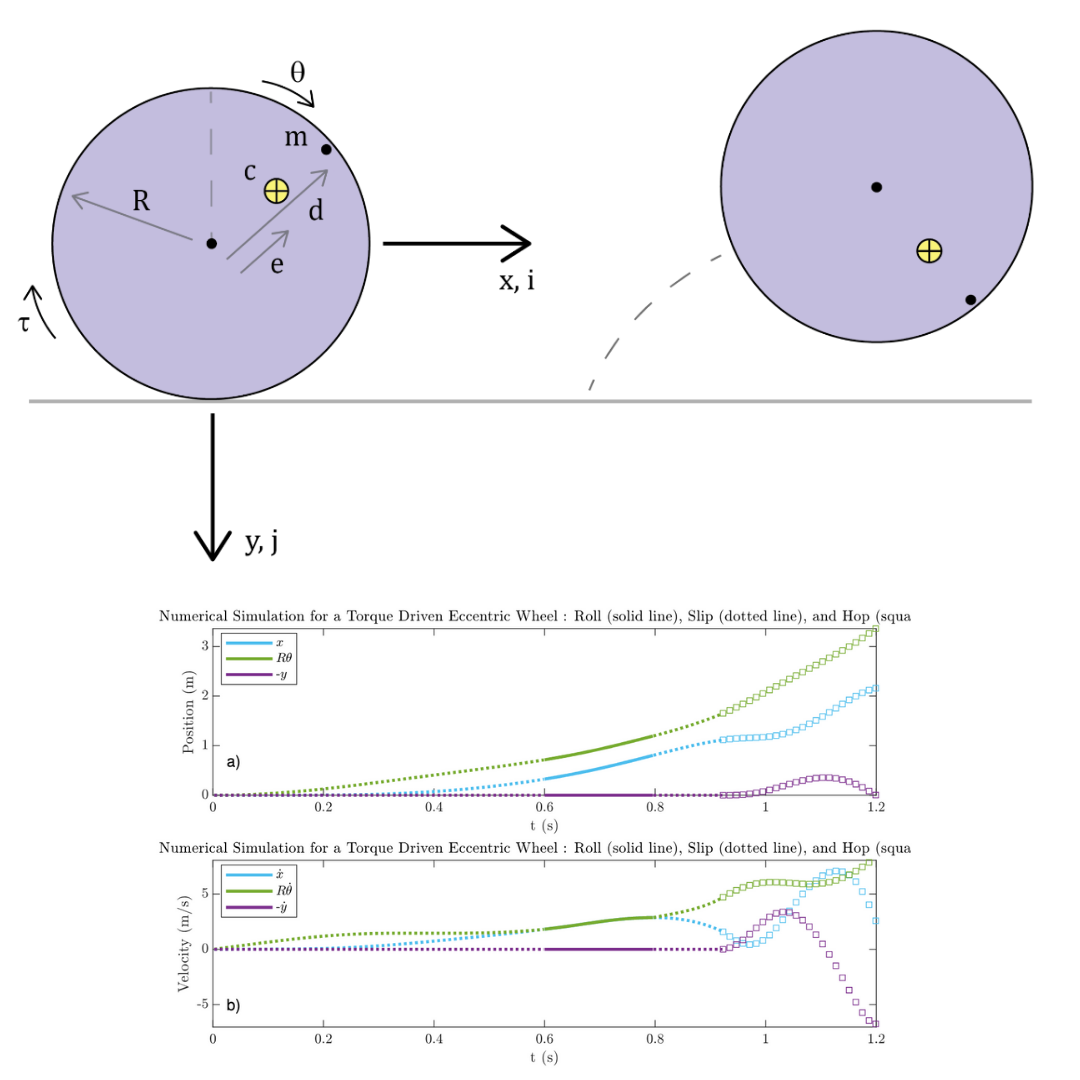
This paper seeks to explore and compare supervised learning methods for phase identification (i.e., roll, slip, and hop) in simulated data from a driven eccentric wheel as a prototypical non-smooth system.

The Eccentric Disk and Its Eccentric behavior
Sam A. Moore, Dean Culver, Brian P. Mann
European Journal of Physics, 2021
paper

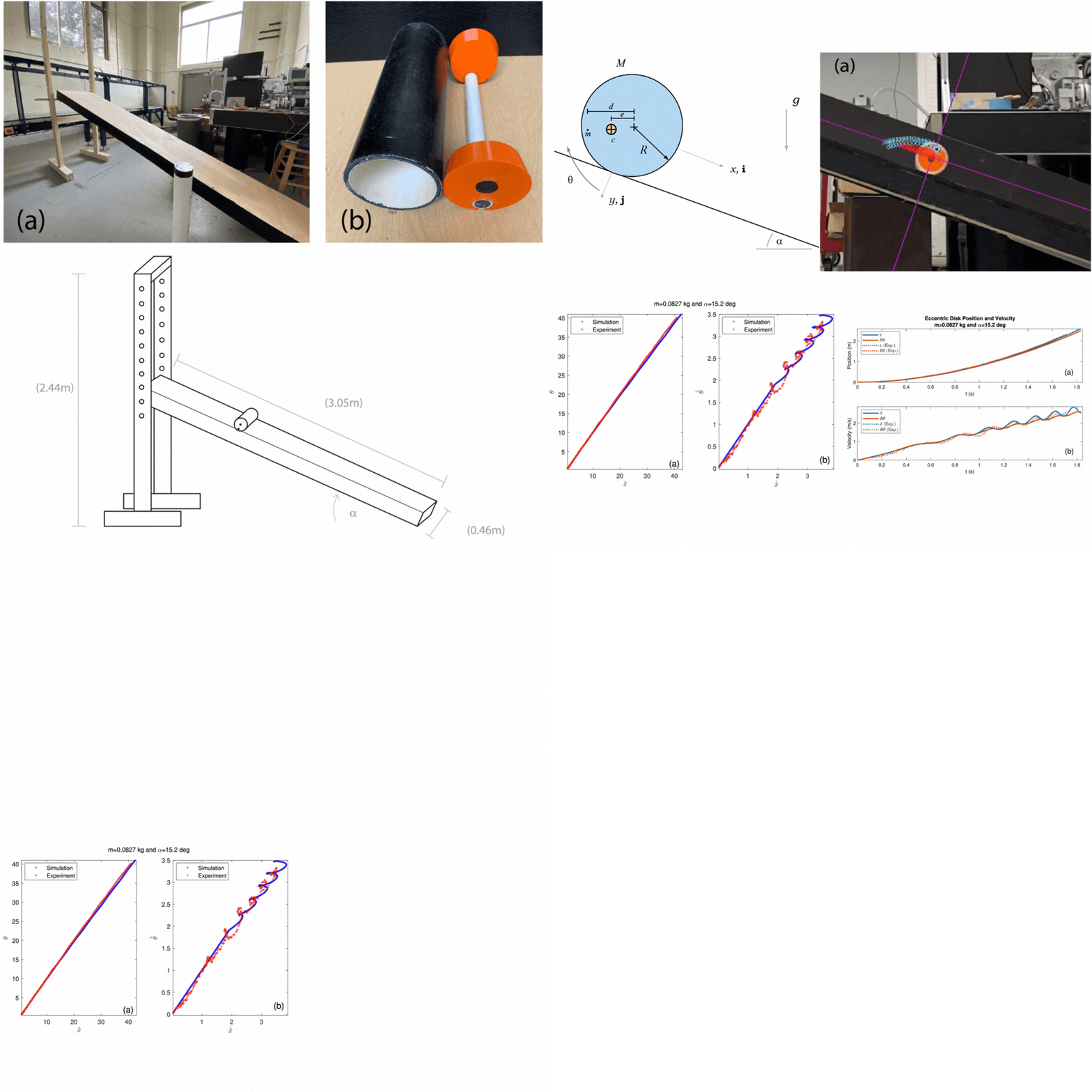
An eccentric disk has a non-constant normal force and therefore has four distinct phases of motion: oscillations about a stable equilibrium, roll without slip, roll with slip, and hop. In this work, the system is analytically modeled using an augmented Lagrangian formulation, solved with numerical integration, and experimentally realized.


Webpage template from Jon Barron